Alfred Tomatis Method was born in Nice, southern France in 1920, the son of famous French opera singer. His father took him everywhere, and by his teenager years, he had absorbed the entire repertoire of operas.
Aged 11, he went to Paris and eventually became an ENT surgeon, performing thousands of operations.
Besides his own personal discoveries, he worked as the house doctor at the Paris Opera. He devoted his life to research human listening and interaction. In doing so, he challenged conventional medical theories with regard to how sound affects brain development and function.
In the late 1940s, Tomatis was working in occupational medicine for the aeronautics industry, helping workers in noisy environments. It was there that he began to notice something surprising: people who had developed hearing problems from loud machinery also often had voice problems.
Tomatis wondered whether damaged hearing might be affecting how they used their voices. Around the same time, his father started sending him singers who were having trouble with vocal control. Because Tomatis understood both the ear and the voice, his father hoped he could help.
One day, two highly regarded singers came to see him, each with similar issues. Whenever they tried to sing in a higher range, they would suddenly lose control and go out of tune. They seemed to “get stuck” at a certain note. Tomatis wasn’t sure how to help them, so he tested their hearing and discovered that both had a weakness at the same frequency - 4000 Hz. This was the same pattern he had seen again and again in workers exposed to loud machinery.
This led him to suspect that even singers could injure their hearing — not from machines, but from their own voices. To test this idea, he examined numerous singers and musicians and kept observing the same hearing pattern over and over. He concluded that people can only sing what their ears are truly able to hear: the voice reflects what the ear can pick up.
Understanding this link between hearing and voice, Tomatis wanted to find a way to help people “hear better” so their voices could improve. He studied recordings of famous singers, especially the legendary Caruso, and carefully analysed the sound of their voices. He also examined the great tenor Beniamino Gigli in person and compared his hearing test with the recordings of his singing. This helped confirm his idea that the ear controls the voice in a kind of feedback loop.
Next, Tomatis tried giving his singers “Caruso‑style” listening: they wore headphones, spoke or sang into a microphone, and heard their own voice back through a special filter tuned to the qualities of Caruso’s voice. Amazingly, they suddenly sang more easily and felt a sense of well‑being and relief. But as soon as the headphones came off, the old problems returned.
Tomatis realised that the challenge was to make this improvement last. In 1954, he invented a device called the Electronic Ear, using a technique called electronic gating. This device was designed to train the ear to listen in a more balanced way over time, and in doing so, help people develop a more natural, freer voice.
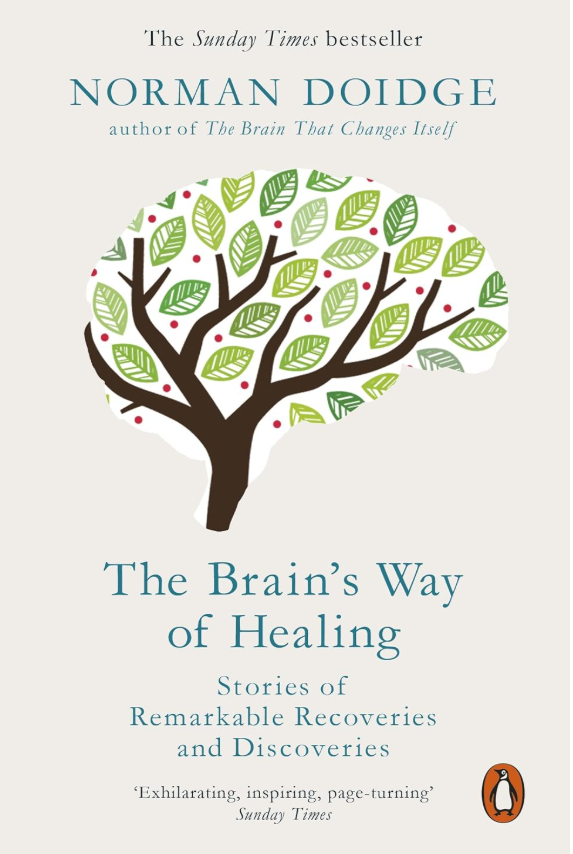
The neurologist Norman Doidge wrote in his book, The brain’s Way of Healing:
“TOMATIS WAS so FAR AHEAD of his medical colleagues that he was all too often depicted as a quack who dishonoured his profession by performing “non-medical acts” with mere sound. His dumbfounded peers insisted that a physician can’t cure a brain problem by passing sound into the ear. Instead of being cowed, he would shoot back a Tomatisism, saying that in fact the brain was a mere appendage of the ear and not the other way around. And he was, technically, quite correct: the primitive vestibular apparatus (the statocyst) actually evolved in animals long before the brain did.
Alfred Tomatis died on Christmas Day 2001. He did not live to see the explosion of understanding about the subcortical brain that we are now witnessing, which helps clarify how he achieved his astonishing results.”

Alfred Tomatis
1920-2001